

THE SIMPLEX METHOD
Why do students who do well in class tests struggle in their mocks?
It isn’t always because they don’t know the maths. Often, it’s because they’ve never practised working out which maths a question needs.
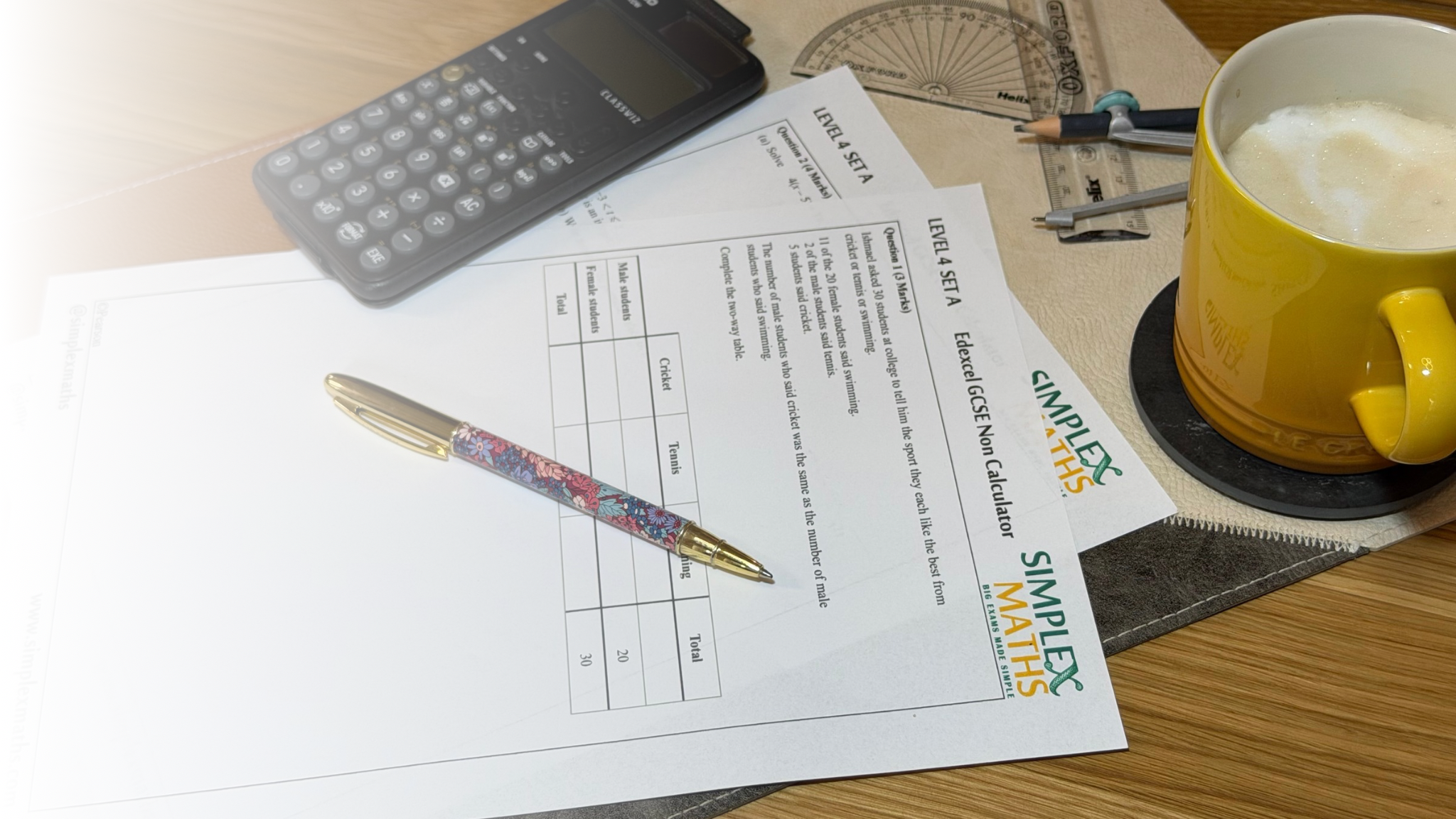
Recognising the question is a skill
Take Pythagoras’ theorem.
Every question is about Pythagoras
Your child knows exactly what to expect and which method to use. They feel confident, and they score well.
The question doesn’t tell you it’s Pythagoras
Topics are mixed together. First your child has to spot the clues, then work out which method to use, and only then do the maths.
And the good news is that it’s a skill that can be practised.
The five skills every worksheet practises
These are the skills that turn knowing the maths into marks on the day.
Reading an unfamiliar question
Staying calm when a question looks new.
Spotting the clues
The words, numbers and diagrams that point to a method.
Choosing the method
Working out which maths the question actually needs.
Knowing where to start
Getting the first step down, and the first mark.
Switching between topics
Moving from algebra to geometry without losing focus.
Why we mix the topics
A GCSE paper doesn’t come in neat sections. It can jump from algebra to geometry to number to statistics, and each needs a different way of thinking. So every worksheet mixes them too.
Research on maths learning has found that mixing topics in practice, known as interleaving, helps students choose the right method in tests.
Little and often
Short enough to fit into a busy week, regular enough to build the habit. Expect it to take nearer 30 minutes at first; that’s part of the learning. Once your child can complete the worksheet accurately and confidently in 15 minutes, they’re ready to move up to the next level.
Getting it wrong is part of learning
The aim isn’t just to get the right answer. It’s to become confident looking at a question your child has never seen before, and knowing what to do next. That’s why the order matters.
Try every question
Even if your child can only do the first step. There are marks for it, and it might unlock the next one.
All plansCheck with the written solutions
Follow every step. If your child’s method is different, the mark scheme shows which marks it earns. On Basic, use the mark scheme.
Standard and PremiumWatch the videos
Step-by-step explanations with examiner tips, for anything that didn’t click.
Standard and PremiumTrack progress
Record each score on the monthly tracker and note which topics to practise next.
Standard and PremiumSend it to an examiner before checking any answers. They see what your child really did, mark it, and explain exactly where marks were lost. Then the solutions and videos make far more sense.
Built from what we see every exam season
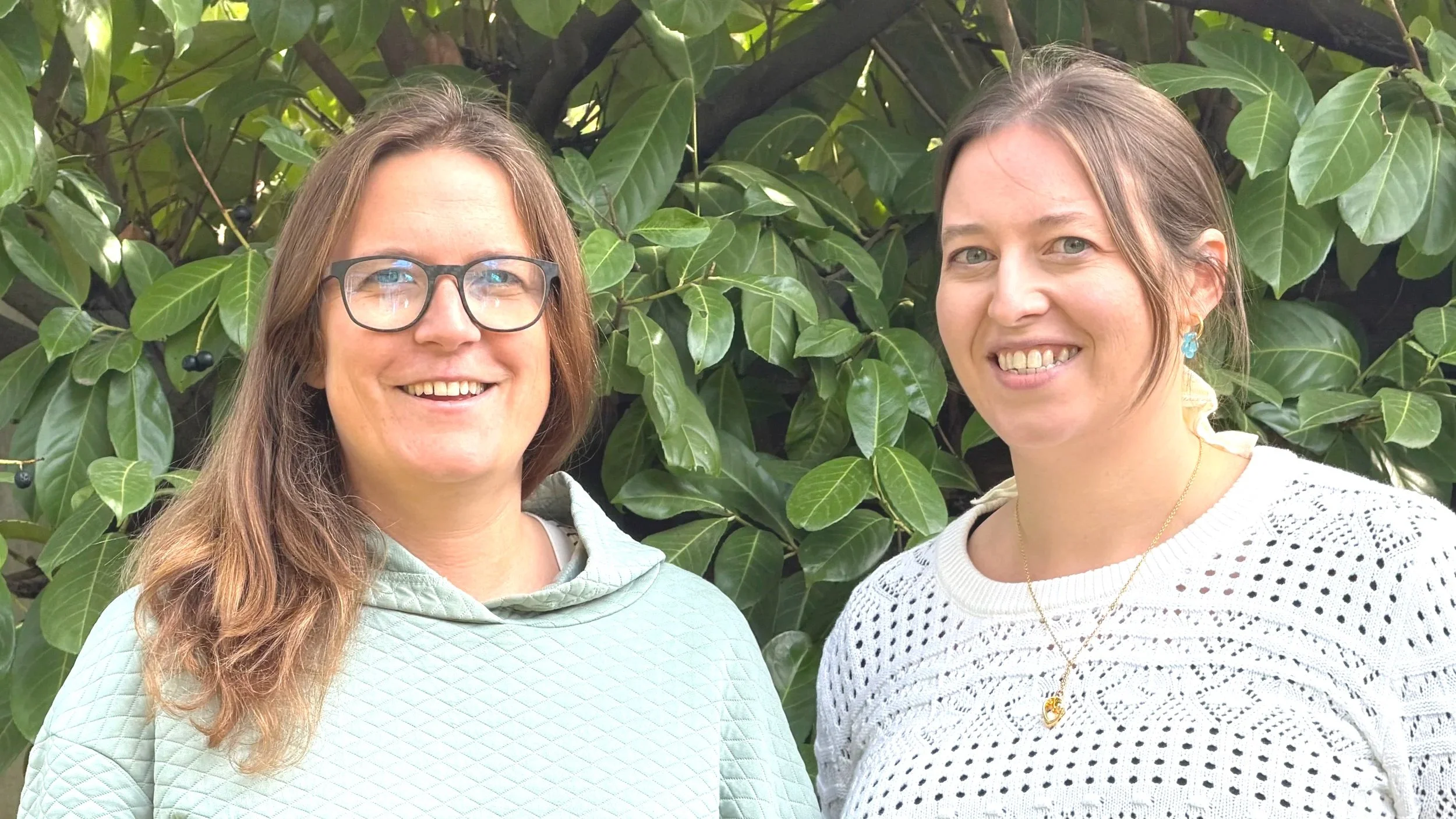
Hannah and Fi are maths teachers, private tutors and experienced GCSE examiners. The Simplex Method grew from what they kept seeing: students who knew the maths, but lost marks because they couldn’t see where to start. It’s how they teach their own students, and now it’s available to yours.
See the Simplex Method in action
Try a real Level 4 week free: worksheet, written solutions, a video and example examiner feedback.
THE SIMPLEX METHOD
What is the Simplex Method?
THE SIMPLEX METHOD has grown from the combined experience of two maths teachers, working one-to-one with students and marking exams.
We noticed something that happens to many students.
At school, they can learn a topic and do well on the immediate topic tests. But when it comes to mocks and end-of-year papers they often struggle.
They haven’t recognised which process to use. They have to work out for themselves what each question is asking and where to start.
Take Pythagoras’ theorem for example. A student might learn the formula and be confident in a small test that is only focused on that one method. Every question will involve Pythagoras’ theorem, so they know exactly what to expect and which method to apply. Then in a real exam with mixed topics it will not be immediately obvious that it is a question involving Pythagoras.
This is where THE SIMPLEX METHOD comes in.
THE SIMPLEX METHOD is about expecting the unexpected.
It is about practising how to look at an unfamiliar question, spot the clues and work out which mathematical method to use.
And the good news is: this is a skill that can be practised.
How does it work?
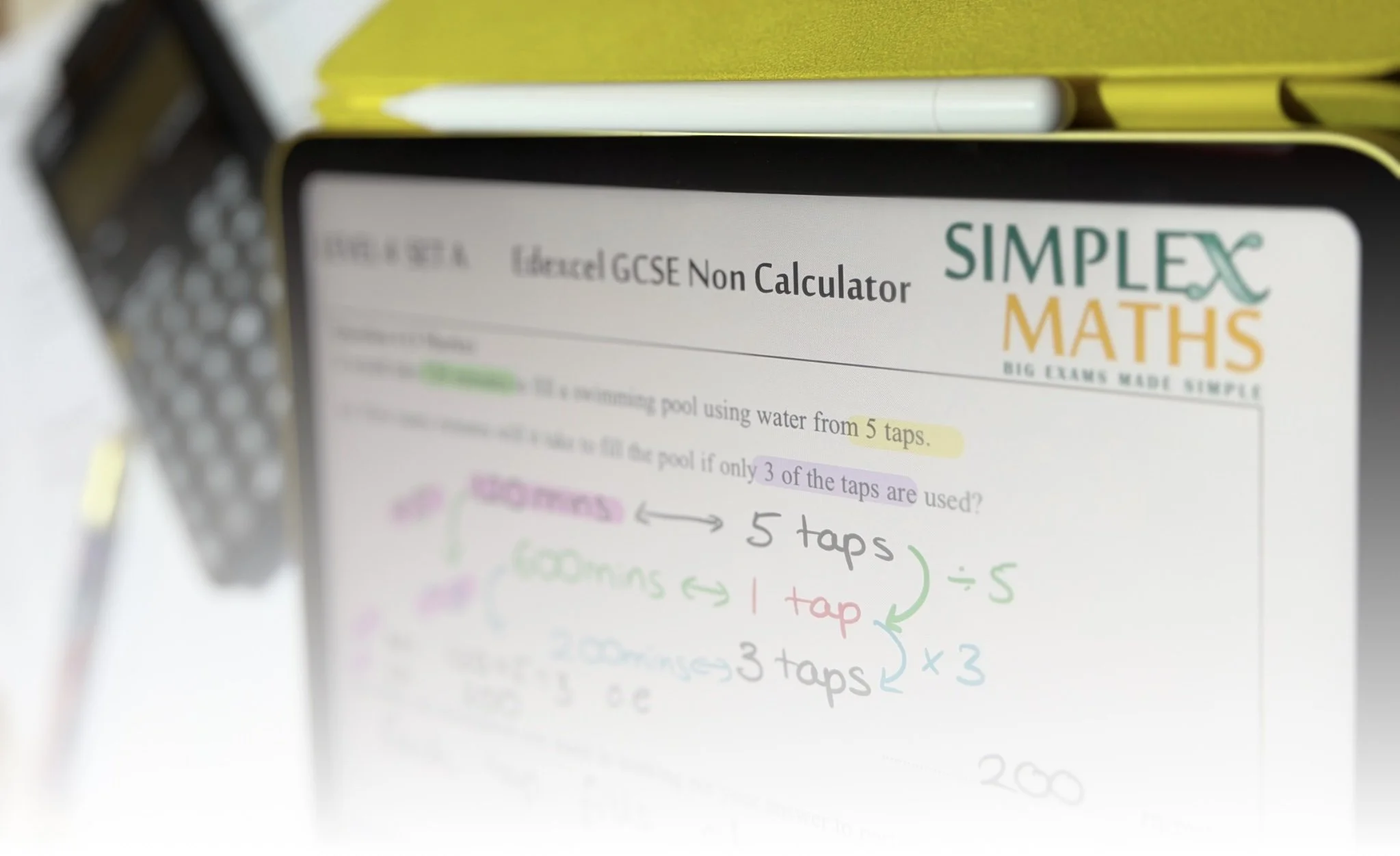
Every week you will have a new worksheet. The worksheets contain a mixture of different maths topics, just like a real GCSE exam. They are worth 15 marks and should take 15-30 minutes to complete (when at the right level)
This is where THE SIMPLEX METHOD helps you practice 5 key skills:
❶ Reading an unfamiliar question
❷ Spotting the clues
❸ Working out which method to use
❹ Knowing where to start
❺ Switching between different areas of maths
Our video solutions also show that there isn't always just one way to solve a maths problem. Students can see different approaches and learn to think about the clues within a question.
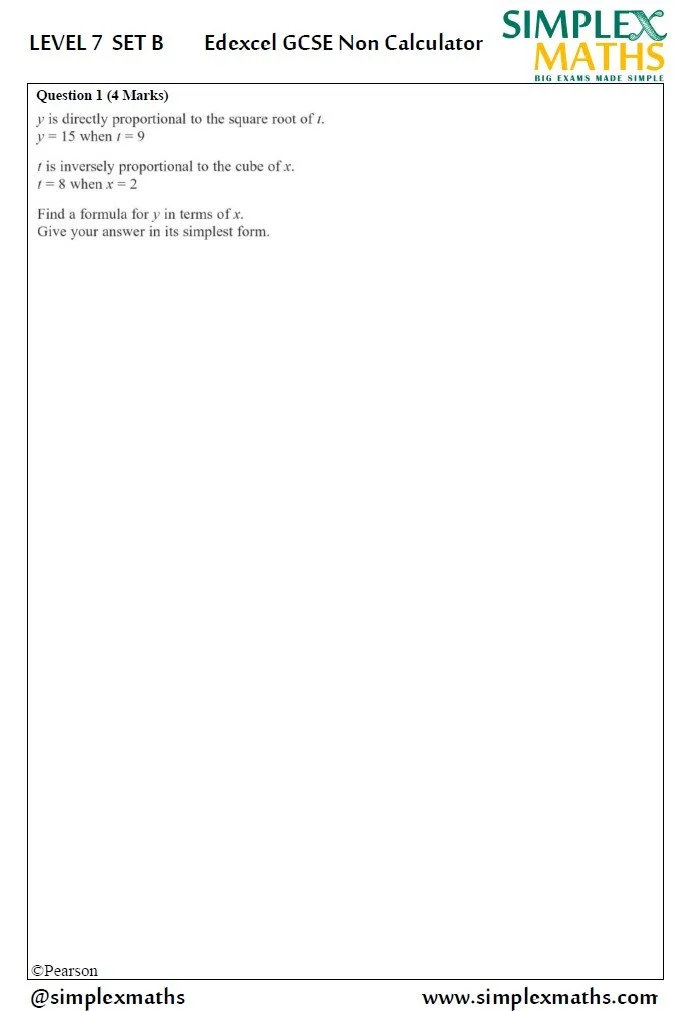
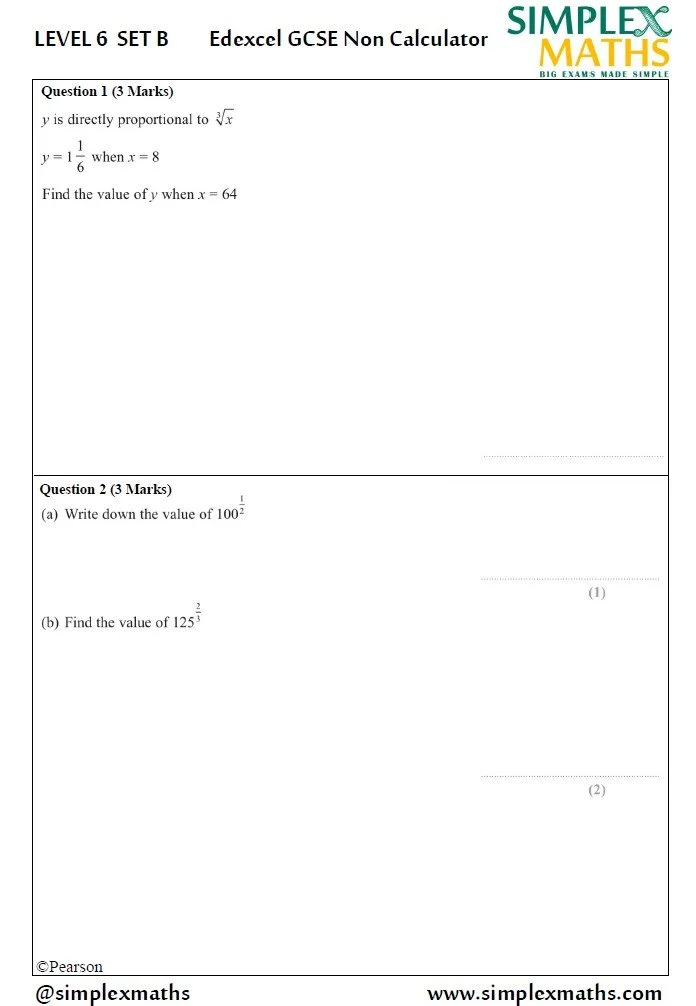
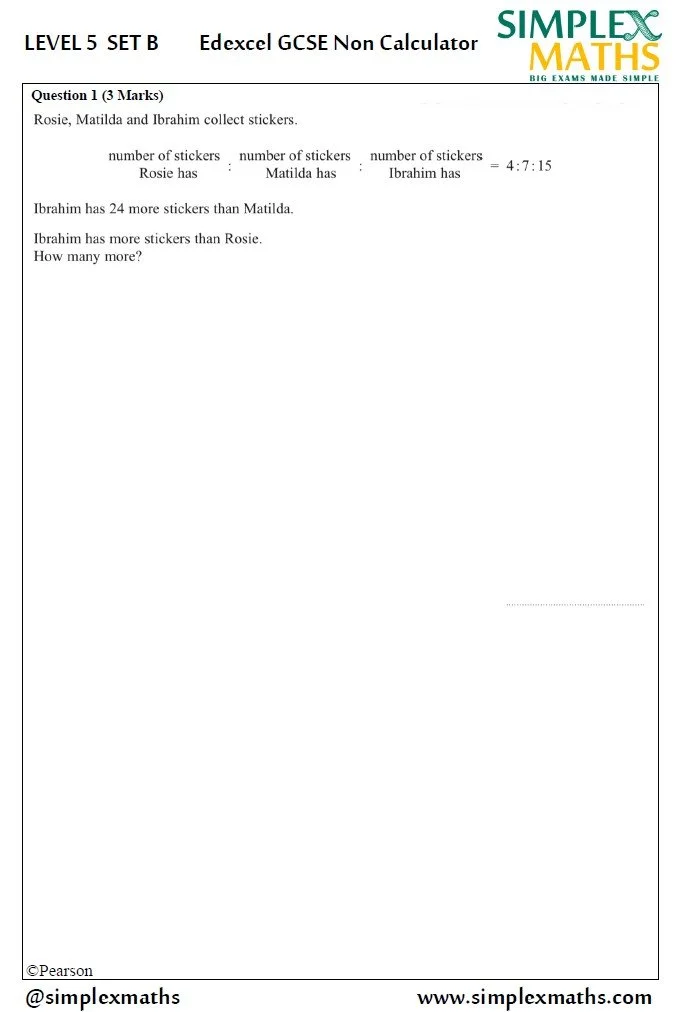
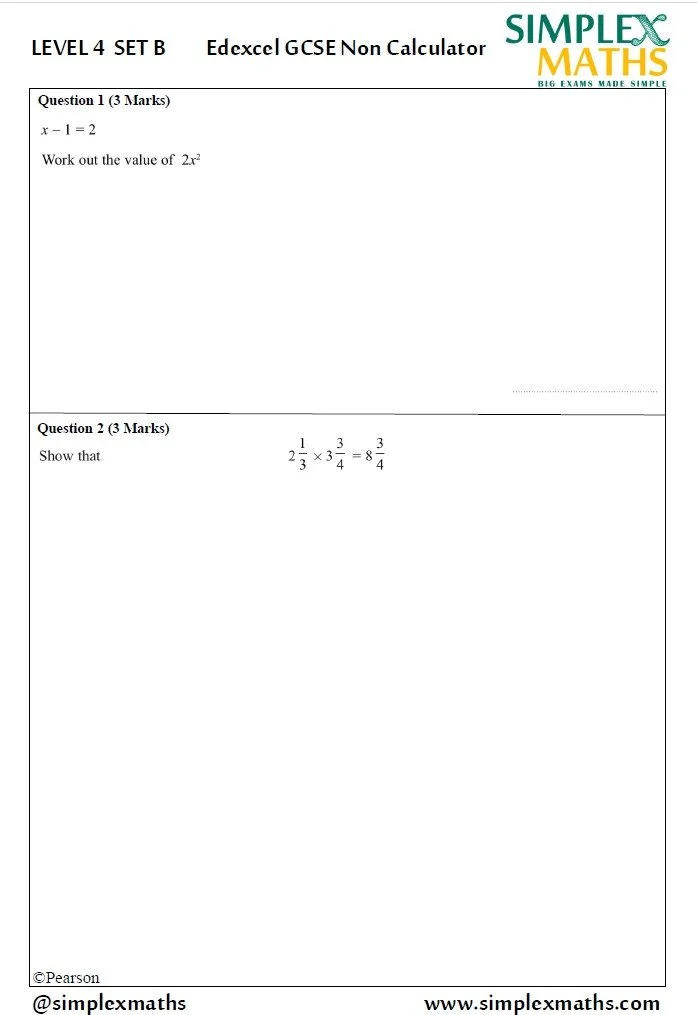
Why mix the topics?
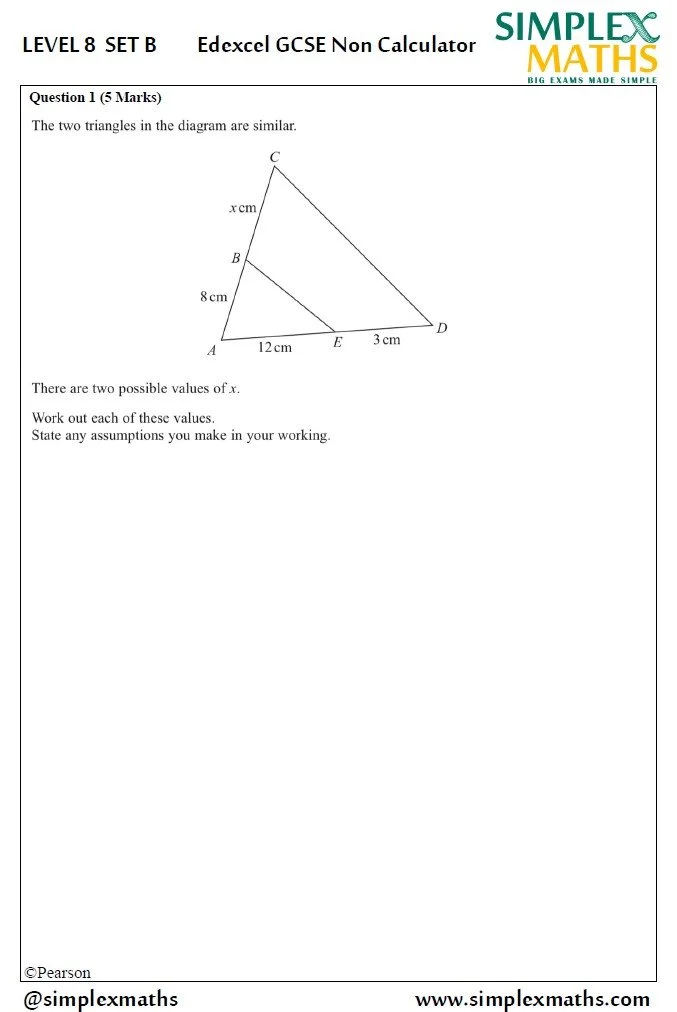
GCSE Maths isn't divided neatly into separate sections. An exam can move from algebra to geometry, then number, then statistics. You have to be ready for anything.
Each area of maths requires different ways of thinking, so switching between them can be difficult.
Every worksheet is deliberately includes a mixture of topics. This helps students build the confidence and flexibility they need to adapt when topics and questions change.
Algebra → Geometry → Number → Statistics
Just 15 marks a week
Each worksheet is only 15 marks, so it should take around 15–30 minutes to complete (when working at the right level).
It's short enough to fit into a busy week, but regular enough to build the skills students need for their exams.
15
marks
15-30
minutes
Review your answers your way
Every student learns differently, so we give you a choice of how to review your answers.
You can use:
The original mark scheme

Worked solutions

Video solutions

Or have us mark it for you
The aim isn't just to get the right answer.
It's to become confident at looking at a question you've never seen before and knowing what to do next.
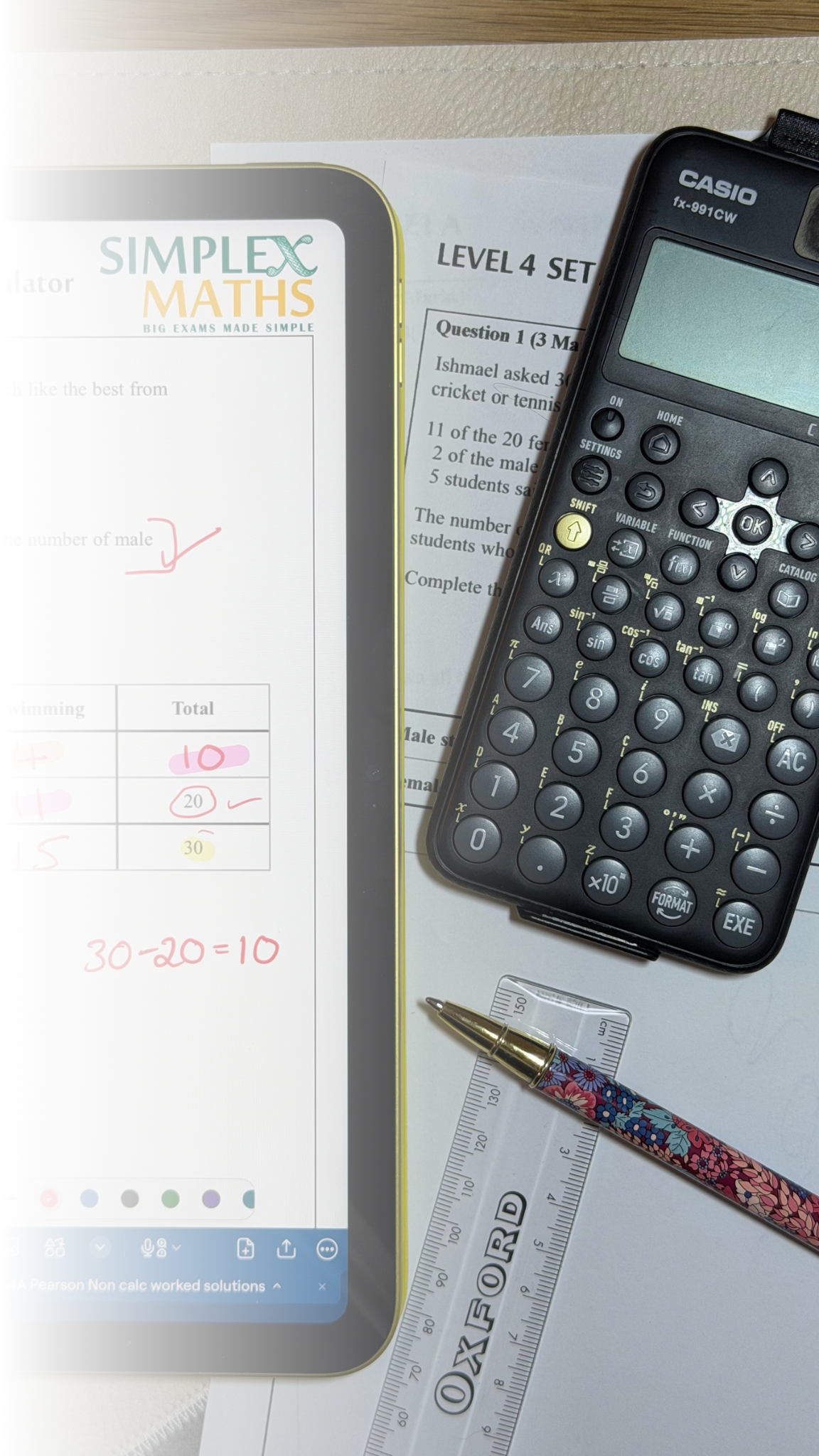
That's THE SIMPLEX METHOD — something we have naturally been using with our own students over the last few years, and are now sharing with you.
How to use our Subscriptions
❶ →
Start at level 4
❸ →
15 marks and real GCSE exam questions
❺ →
Five week months have unique bonus worksheets*
❷ →
Four worksheets each month - One for each week.
❹ →
Access to a new worksheet each week
❻ →
If all monthly worksheets correct in under 15 minutes then move up to next level subscription.
Worksheets (Free)
15 Marks per worksheet
Real exam questions
15-30minutes (when at the right level)
New every Monday
Mark Schemes (Free)
Official mark schemes
Complete and accurate
Use alongside your worksheet
Worked Solutions*
Written solutions
View how to layout your answers
Great for revision
Video Solutions*
Clear explanations
Alternative methods
Mark scheme notes
Examiner insights
Personalised Feedback**
Upload one completed worksheet each week.
Marked by senior GCSE maths examiners
Guidance and next steps
*Available with STANDARD Subscriptions
**Available with PREMIUM Subscriptions
Frequently Asked Questions,
-
Definitely. You can cancel your subscription at any time and sign up to another one. You will have access to both subscriptions until the end of the original billing cycle.
We recommend:
moving up a level if you can confidently complete worksheets in 15 to 30 minutes
Moving down a level if you are struggling to complete the worksheets in 40 minutes.
If you wish to upgrade from a STANDARD to a PREMIUM subscription within 14 days of sign up (or 14 days of monthly renewal) then please contact us with details and we will discount you the cost of the STANDARD subscription.
-
We recommend all students start at Level 4 subscriptions. Once you have mastered this level - you can consistently give correct solutions within 15 to 30 minutes - then move up to the next level. It is still worth checking out the videos* if you have correctly answered the questions as they will give you examiner insights and show you exactly where you are getting the marks.
Please Note that Foundation GCSE only goes up to level 5.
*Video solutions available with a STANDARD or PREMIUM subscription.
-
Absolutely. Even though we have predominantly used Pearson Edexcel papers for our worksheets, the syllabus and topics are exactly the same for AQA, OCR and WJEC.
If you are taking IGCSE there will be a few topics omitted but these worksheets are still great for exam practice.
-
It is important that if you come across something unfamiliar that you see what you already know and how you can apply it.
We understand that sometimes a topic may come up that you haven’t finished yet. For year 11’s we believe that repetition at this point is extremely important. In each topic we need time to learn, review and revise, so at any point in year 11 getting a head start isn’t a problem. Check out the video explanations. You never know, you may be surprised at how much you already knew!
-
Absolutely! These mixed questions can give such great training for year 9 and 10 students as many wont see any exam papers until the end of year 10 mocks (or even year 11 mocks). These worksheets and explanations can really help to increase confidence and exam technique before their final year.
Level 4 is the recommended starting point for all students and most year 9 and 10 students should have been taught all these topics. Each level has one years worth of content so we advise year 9 and 10 run the full year at level 4 or 5 and move up one level the following year.
-
Yes, access is available until the first Monday of each month, so you will always have one week to complete each worksheet.
-
Memberships are flexible and can be cancelled at any time from your account. You’ll retain access through the end of your current billing cycle.
-
Absolutely. You can have more than one level subscription on one account. Perfect for more than one student, or just for extra practice at different levels of questions.
-
Each week of the month we will accept and mark one worksheet. The submission dates for each worksheet will be made clear on your subscription page.
-
Our aim is to work along side schools and we would love to have your feedback on our products. We are aiming to release bundles for schools in late 2027. Please sign up to our emails to receive further updates or contact us at contact@simplexmaths.com
Do you still have a question or would like to give some feedback?
Contact us for subscription queries and feedback. We would love to know what you like or how you think we can improve.